Key takeaways
- AI can help turn family history, decisions, relationships, and a founder’s experience into a knowledge base for future generations.
- “Digital clones” could give heirs a new way to consult the judgement and values of previous generations.
- The more personal AI becomes, the more important questions of governance, ownership, security, and human oversight become.
“We can really mimic the founder’s personality, judgement, knowledge,” says Tommie Lo. “When the user talks to these agents, it’s really like talking to the digital clone of the founder.” The idea sounds futuristic, but its purpose is rooted in a familiar concern for entrepreneurial families: how could AI help to ensure that a founder’s experience and judgement are not lost as wealth passes from one generation to the next?
Christos Anagnostopoulos, Head of Family Office Solutions and Advisory (Asia) at Julius Baer, explored this question with Lo, founder and CEO of technology-enabling company Preface. Their conversation looked at how AI could capture family knowledge and founder wisdom, how future generations might use it, and where the limits should lie.
From family archive to living knowledge
Families have always recorded their histories. As Lo explains, however, storing information and drawing meaning from it are different things.
“We used to have a lot of data, but these databases don’t have relationships,” says Lo. “Now with a knowledge base, we can actually collect hundreds of years of events that happened and transform this information into knowledge.”
And that knowledge can continue to evolve. “It’s not a zero-to-one step. It’s actually a continuous-flow concept,” says Lo. “After we build the initial version of the digital clone, the founders and even their family office and teammates will keep working with this clone, so that the clone will understand not only the historical information but also the current information.”
Could a founder leave behind a digital adviser?
Lo describes working with founders, including people in their seventies and eighties, who are exploring whether AI agents can capture elements of their thinking, values and judgement. The process involves more than feeding documents into an AI system.
“We conduct an interview with the founders to understand their personal preferences and important events in their life, because with traditional databases and files, there is no ranking and prioritisation,” says Lo. “After we set up the initial version of the digital clone, the founders themselves will be talking to it by inputting more knowledge-layer information or identity-layer information.”
For future generations, that could create a new way to draw on the experience of those who came before them. “The next generation from the founders would take this as a really good reference board,” says Lo. “When the newer generations need to make important business decisions, it can become a really good adviser and provide guidelines for the next generation, when they are working on certain important investment or management decisions.”
Preserving wisdom is not the same as preserving a person
There are limits, however, to how closely technology can, or should, recreate an individual. “The human emotions will still be difficult to mimic,” Lo says. “Even if technology-wise it is feasible, the founders may still prefer that agents cannot totally mimic them, from an emotional perspective.”
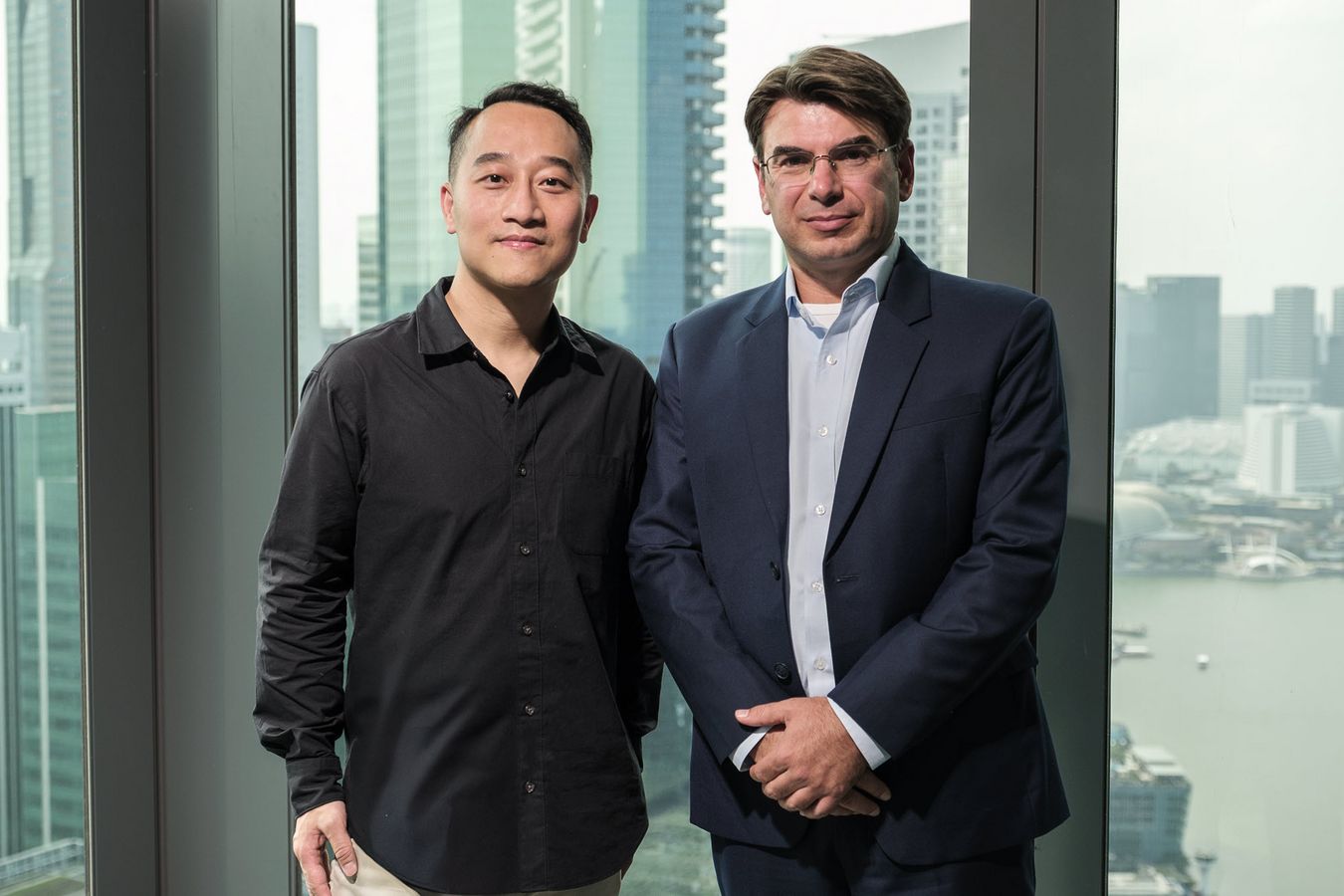
Tommie Lo, CEO and founder of Preface AI, with Christos Anagnostopoulos, Julius Baer's Head of Family Office Solutions and Advisory (Asia).
Instead, Lo sees a more practical role for the digital clone within the family office. “It will become an AI agent working inside their family office,” he explains. “When the real human teammates working in the family office have certain important decisions about judgement, values or preferences, they would consult this digital clone at times.”
The same technology could also support succession and education. Lo encourages founders to focus less on recreating themselves and more on transferring the important family judgement, values and legacy. “These agents become an education agent for not only the next gen, but also the third and fourth gen,” he says.
New possibilities bring new governance questions
The more closely an AI agent reflects an individual, the more sensitive the questions become. Who owns it? Who can access it? What information should be added? And when should future generations not rely on it? “This is an important question about governance and even what we call private property rights,” says Lo. “Who really owns these agents? At this moment, technology has [developed] faster than the legal side.”
For families, that makes clear rules around AI essential. “Usually, the family office will have a meeting and draft guidance on how to use these agents,” Lo explains. “Not only how to use them, but how to keep harnessing them and have really good control: when to use them, when not to use them, when to add more information, or when not to rely on them.”
Security is equally important. Lo describes options including storing information on-premise or in a private instance within a secure cloud environment. Governance, ownership and data protection therefore become integral to the discussion.
The future family office is still human
Despite the possibilities, Lo doesn’t see AI as a straightforward substitute for the people who run family offices. “A lot of family offices would want to leverage AI to enhance efficiency instead of replacing humans,” he says. “Humans are definitely in the loop. A lot of the time these agents are executing quite function-specific tasks. We humans carry out most of the work.”
The transition could also become an intergenerational exercise. Lo recommends that older and younger family members learn about the technology together, even if the younger generation ultimately takes a greater role in adopting it.
For families wondering where to begin, his advice is pragmatic. “I would recommend first we need to know what we don’t know. Learn it first,” he says. “It always starts with literacy before adoption. Once we adopt it, we need a roadmap. After setting the roadmap, then we can truly build and deploy workflows and agents to make this transformation real.”
Related Articles
The psychology of timing your business exit
- 06.11.2026
- Family
- 4 min